
R-22 to R-407C Refrigerant Retrofit Guide
R-22 (often called Freon) has been phased out under EPA regulations. The remaining supply is expensive, shrinking every year, and limited to reclaimed refrigerant. For older but otherwise healthy air conditioning systems, a retrofit to R-407C can be a cost-effective way to keep your equipment running — without the sticker shock of an R-22 recharge or a full system replacement.
R-407C is a practical retrofit option for many R-22 systems in Vail, Tucson, Rita Ranch, Corona de Tucson, Sahuarita, and the rest of Southeast Arizona. The key is knowing whether your specific system is a good candidate.
Important: R-407C Is Not a True Drop-In
R-407C is not a true drop-in replacement for R-22. A proper conversion requires refrigerant recovery, an oil change to POE oil, filter drier replacement, pressure testing, deep-vacuum evacuation, liquid charging, and performance verification. Done correctly, it is reliable — done improperly, it can damage your compressor.
1. Is an R-22 Retrofit Right for Your System?
A retrofit makes the most sense when your system is mechanically healthy and the main problem is the cost or availability of R-22. A retrofit is usually a good option when:
- The compressor is healthy and running well
- The coils are in good condition
- The leak has been found and repaired
- You want to avoid the high cost of R-22
- The system still has usable life left
On the other hand, a full AC replacement is usually the smarter investment when:
- The compressor is bad or failing
- There are multiple refrigerant leaks
- The coils are severely corroded
- The system is near the end of its life
- There is poor airflow or major efficiency loss
2. Why Use R-407C Instead of R-22?
R-407C is one of the most common replacements for R-22 because its operating pressures are close to R-22, which means the existing compressor and coils can often be reused. Here is what makes it a good fit — and what to keep in mind:
- Similar operating pressures to R-22 — usually no need to replace the compressor
- Lower cost than reclaimed R-22
- No ozone depletion — R-407C is a non-ozone-depleting HFC blend
- Requires POE oil — the mineral oil in R-22 systems must be replaced
- Must be charged as a liquid to keep the blend correct
- Has temperature glide — a small range where the blend boils and condenses
- Cooling capacity may be slightly different than R-22, so performance is verified after the conversion
3. R-22 vs. R-407C Comparison
| Feature | R-22 | R-407C |
|---|---|---|
| Availability | Phased out, shrinking supply | Readily available |
| Cost | Expensive (reclaimed only) | Significantly lower cost |
| Oil type | Mineral oil | POE synthetic oil |
| Ozone depletion | Yes (HCFC) | None (HFC blend) |
| Retrofit required | N/A | Yes — full retrofit |
| Operating pressure | Baseline | Similar to R-22 |
| Charging method | Vapor or liquid | Liquid only (has glide) |
4. Step-by-Step Retrofit Process
Here is how we handle an R-22 to R-407C conversion in the field. Each step matters — skipping the oil change or a proper evacuation is the most common reason retrofits fail down the road.
Recover the Existing R-22 Charge
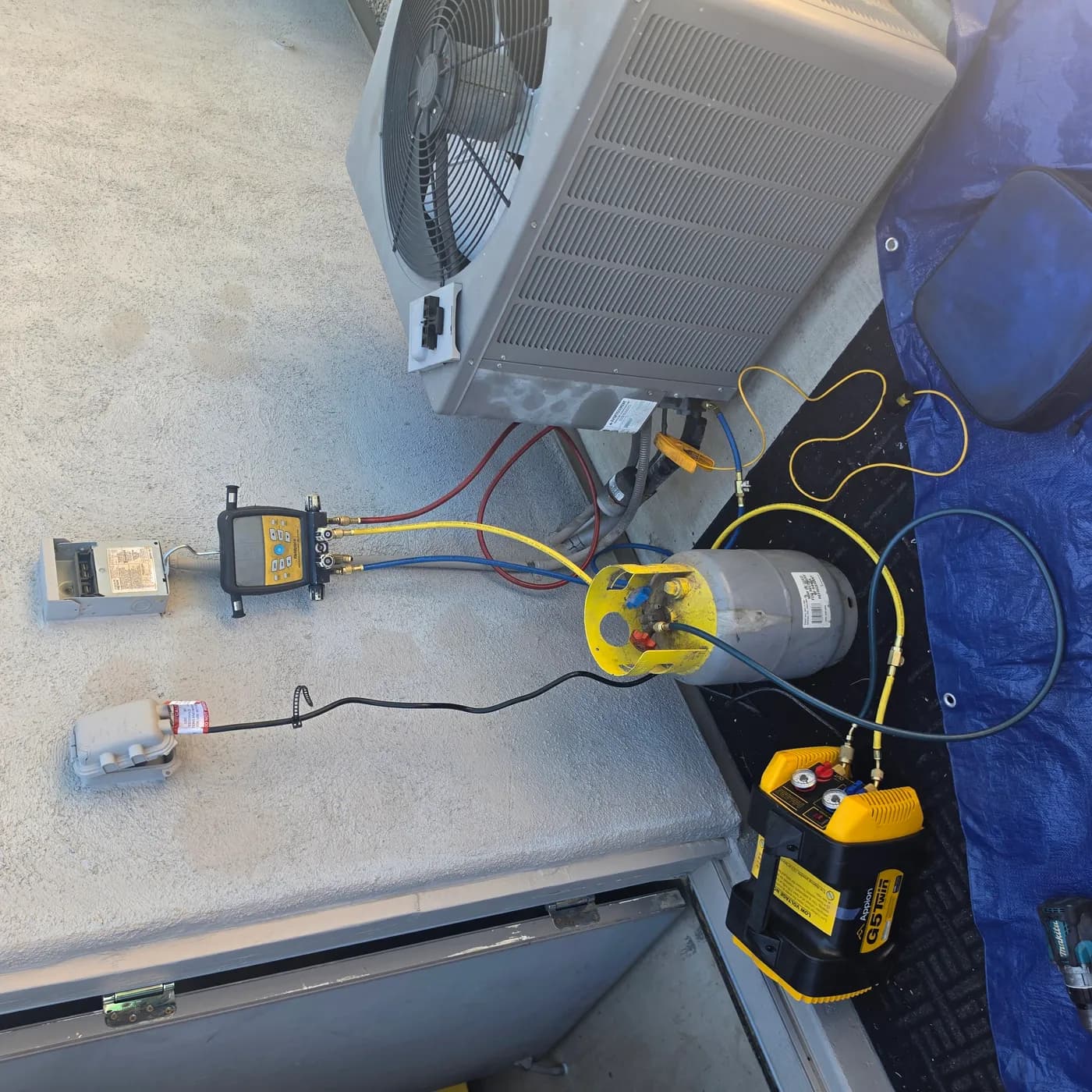
Before any work begins, the remaining R-22 refrigerant is recovered into a certified recovery cylinder using an EPA-approved recovery machine (here, an Appion G5 Twin with digital manifold gauges). Venting refrigerant is illegal — every ounce is captured, weighed, and logged for proper disposal or reclamation.
Remove Mineral Oil, Flush the System & Add New POE Oil
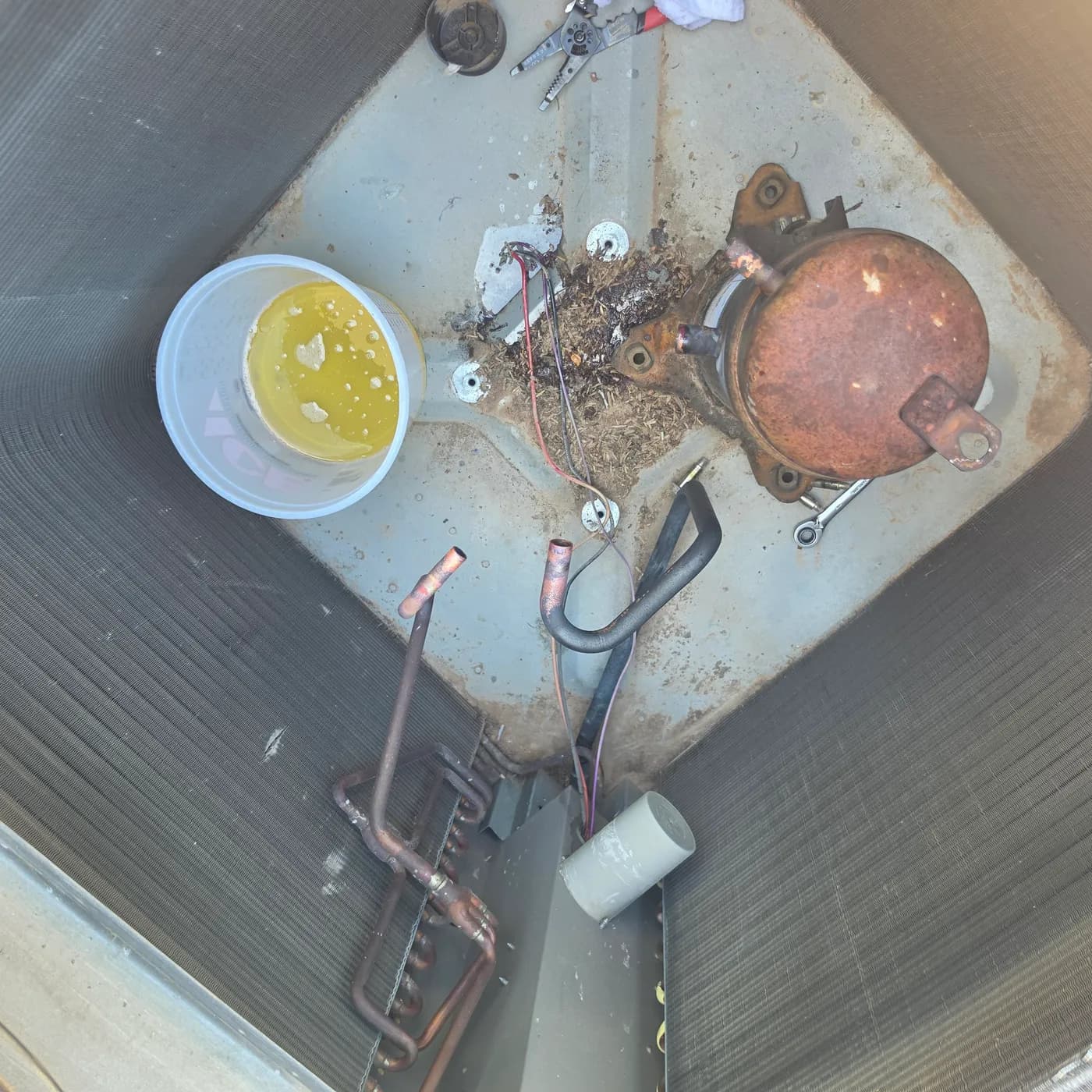
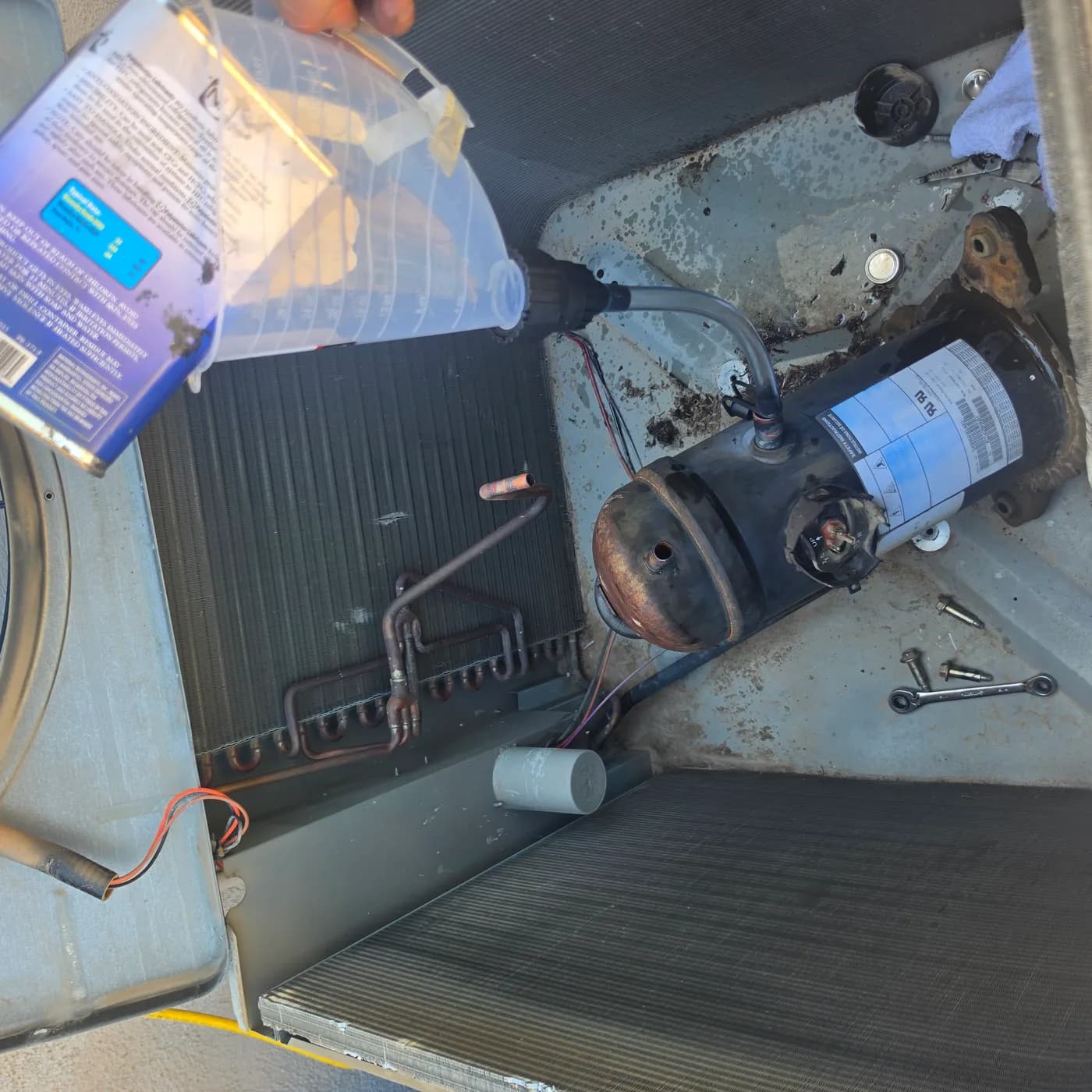
R-22 systems use mineral oil, which is not compatible with R-407C. The lineset and components are flushed to remove residual mineral oil, then a measured amount of new POE (polyol ester) synthetic oil is added to the compressor. Getting the mineral oil down to acceptable levels is critical to avoid oil-return and lubrication problems with the new refrigerant.
Replace the Liquid-Line Filter Drier
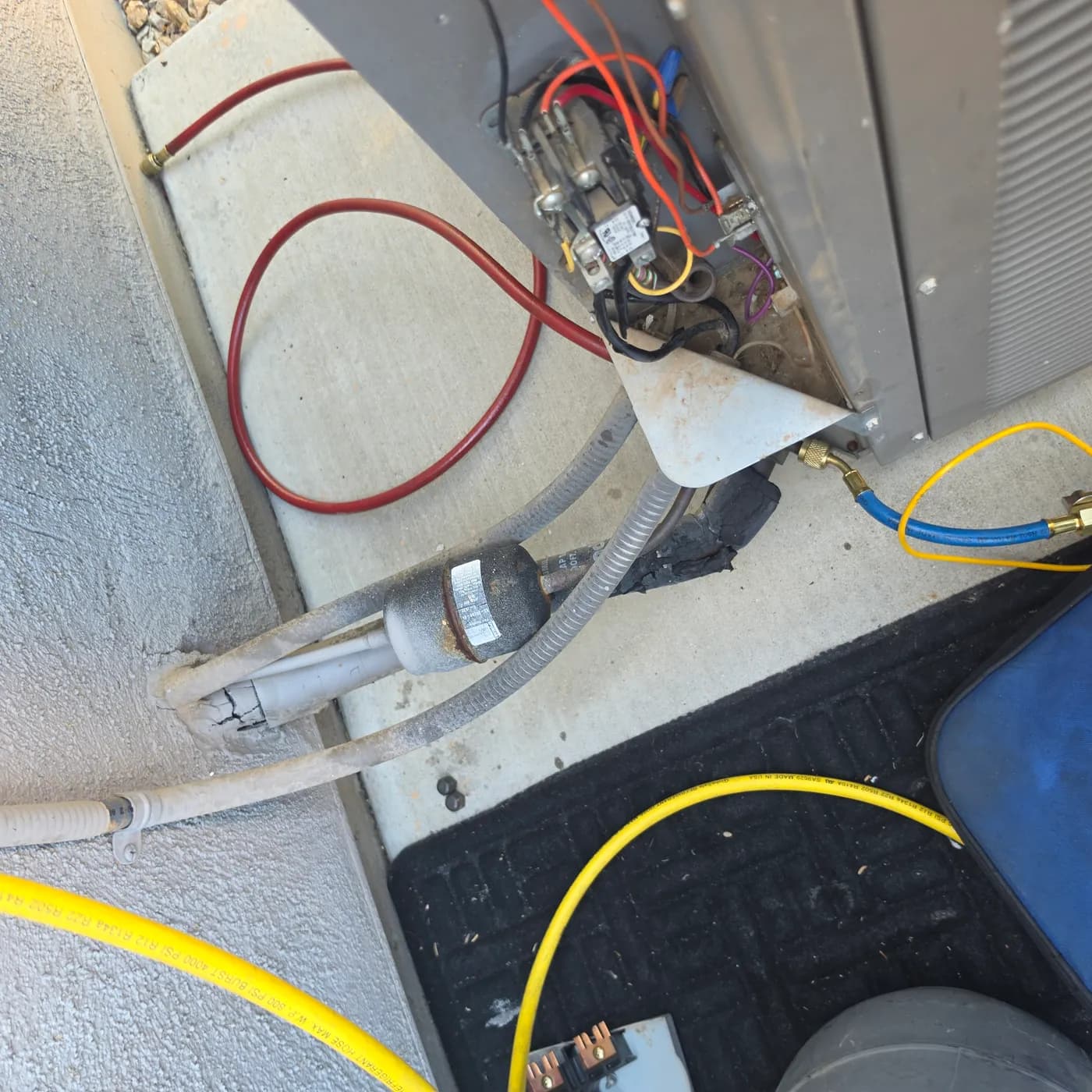
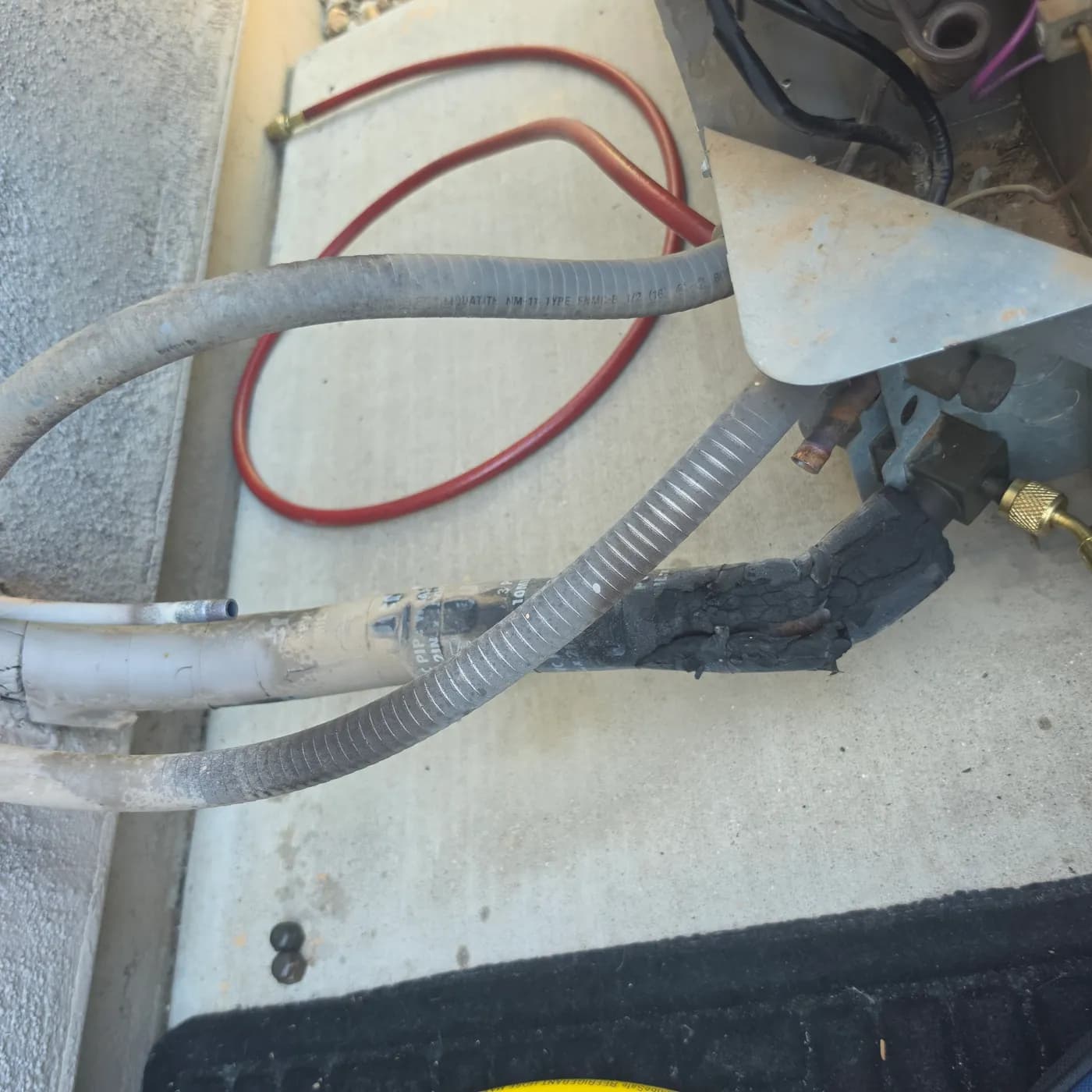
The old liquid-line filter drier is removed and a new one rated for R-407C and POE oil is installed to capture moisture and contaminants. R-407C's refrigerant glide is very similar to R-22, so the existing metering device (TXV or piston/orifice) is compatible and does not need to be changed.
Pressure Test with Dry Nitrogen & Deep Vacuum
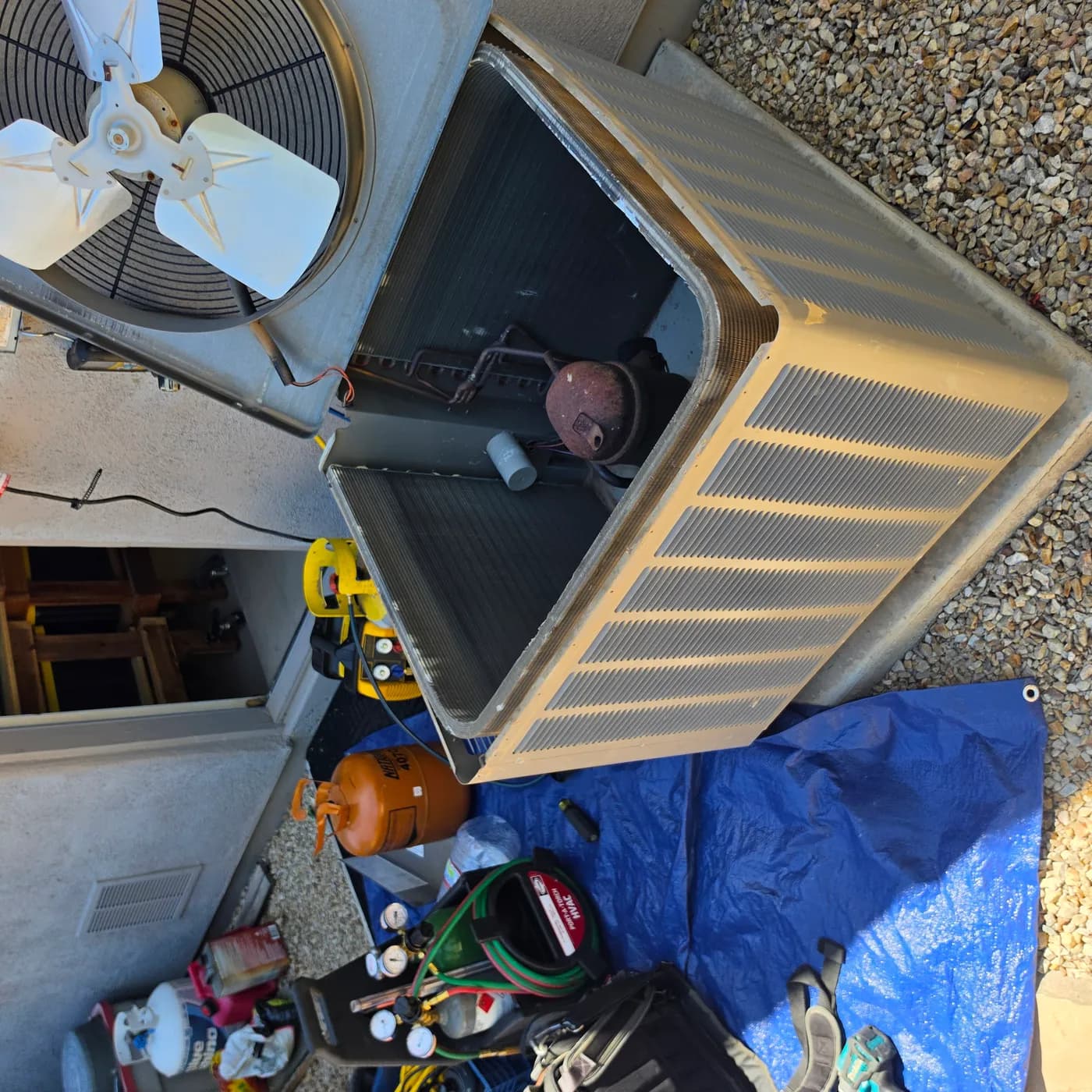
The system is pressure tested with dry nitrogen to confirm there are no leaks, then deep-evacuated with a vacuum pump to remove all moisture and non-condensables. A proper micron-level vacuum is critical — POE oil is highly hygroscopic and absorbs moisture from the air very quickly.
Charge R-407C as a Liquid
R-407C is a zeotropic blend, meaning its components boil at slightly different temperatures (temperature glide). It must be charged as a liquid from the cylinder to keep the blend proportions correct. The charge is weighed in and fine-tuned to manufacturer specifications.
Verify Performance & Label the Unit
Finally, the system is run and checked — superheat, subcooling, suction and discharge pressures, and temperature split are all verified against the target ranges for R-407C. The unit is then labeled to indicate it has been converted so future technicians know what refrigerant and oil it uses.
5. Important Considerations
- Slight capacity difference — R-407C may deliver marginally lower cooling capacity than R-22, so performance is verified after conversion
- POE oil absorbs moisture quickly — the oil is highly hygroscopic, so the system must not sit open to the air
- Correct evacuation is critical — a proper micron-level deep vacuum removes moisture and non-condensables before charging
- The system must be labeled — the unit should be clearly marked as converted to R-407C with POE oil
- EPA Section 608 certification is required — recovery and charging must be done by a licensed technician
- This is not a DIY job — improper handling is illegal and can permanently damage your compressor
6. Frequently Asked Questions
Can R-407C replace R-22?
Yes. R-407C is one of the most common replacement refrigerants for R-22 in existing air conditioning systems. It is not a simple drop-in, though — the system must be properly retrofitted with refrigerant recovery, an oil change to POE oil, a new filter drier, evacuation, and liquid charging.
Is R-407C cheaper than R-22?
Yes. Because R-22 has been phased out, the remaining reclaimed supply is expensive and continues to rise in price. R-407C is readily available and costs significantly less per pound, which is a major reason homeowners choose to retrofit.
Is R-407C a drop-in replacement for R-22?
No. While its operating pressures are similar to R-22, R-407C requires a full retrofit. The mineral oil must be replaced with POE oil, the liquid-line filter drier must be replaced, and R-407C must be charged as a liquid to keep the blend correct.
Does R-407C cool as well as R-22?
Nearly. R-407C provides comparable cooling performance, although its capacity can be slightly lower than R-22. After the conversion we verify superheat, subcooling, pressures, and temperature split to confirm the system is performing to specification.
How long does an R-22 to R-407C retrofit take?
Most retrofits take from a few hours to most of a day, depending on the size of the system, how much oil flushing is required, and how long it takes to pull a proper deep vacuum before charging.
Can every R-22 system be converted?
No. Only systems with a healthy compressor, good coils, and a repaired leak are good candidates. Systems with a failing compressor, multiple leaks, or severely corroded coils are usually better candidates for replacement.
Should I retrofit or replace my old AC system?
It depends on the age and condition of your equipment. If the system is healthy with usable life left, a retrofit to R-407C can save you money. If it is near the end of its life or has major problems, a full replacement is usually the better long-term investment.
Have an Older R-22 Air Conditioner?
Grizzly Comforts can inspect your system, check the condition of the compressor and coils, and give you an honest recommendation. If a retrofit makes sense, we'll explain the process clearly. If replacement is the better investment, we'll tell you that too.
Request an R-22 Retrofit Evaluation